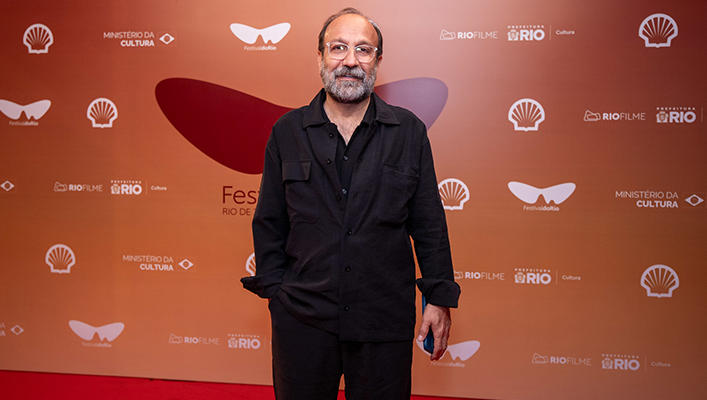
The filmmaker, who is presenting his latest film ‘Parallel Tales’ at the Rio Film Festival in Brazil, made the remarks while holding a masterclass.
Answering a question about ‘Argo’ which won Best Picture just a year after his ‘A Separation’ won Best International Film at the Academy Awards, the two-time Oscar winner said, “I watched the film at the time it came out and felt it was a Hollywood thing”.
In ‘Argo’, loosely based on a true story, director Ben Affleck plays a Latino exfiltration specialist who masquerades as a Hollywood producer to rescue six Americans held captive in Tehran during the US hostage crisis in Iran.
“The problem with these kinds of films in Hollywood [and] some people in the United States [is that] they look at the world from up to down,” he said, adding, “Someday you should ask them: Why do you feel you’re up and we’re down? I don’t understand why they have this ego that they’re up.”
The Iranian director then said Americans often claim to “have democracy”, but they don’t. “You don’t have democracy. It’s a lie.”
Farhadi then recalled spending time in the US a few years ago when working on a project and, during research, travelling to San Francisco to speak with incarcerated men. “I met some people in prison who are Black, [some who come] from other countries, and the real America was there. But people in the world don’t see that part of the United States.”
“I have this problem when they feel they are up and they think, ‘[others] should be like us. Even if it’s in a good way and they want to be kind to you, they wish ‘one day you’ll become like us,’ and no, I don’t want to.”
The director said movies like ‘Argo’ are not deep. “They make these movies for money; it’s a business. And in these films, it’s always a white guy from the United States saving others. My question is: Why? Why does an American go to Cuba or Iran to save people? People understand they can save themselves. Who asked you to come and save us?”
Talking about politics in his films, Farhadi said whenever “you talk about society, you are talking about politics. Even when you talk about family life, their relationships, their difficulties and problems, indirectly you are talking about politics. In my films, I always try not to talk about politics directly because I believe that is a bit far from cinema. The cinema that I believe in is the kind that gives space to audiences to discover things about themselves.”
“Media and cinema don’t give you a complete image of people’s ordinary life. But the thing about empathy is that, all around the world, people are similar to each other. Cinema is based on hate and love. And [when it comes to] hate and love, everywhere is the same. A love between a mother and child is the same in Brazil and in Tehran. The way they express it is different, but the core is the same.”
The 28th edition of the Rio de Janeiro International Film Festival is underway on October 1-11, 2026 in Brazil.