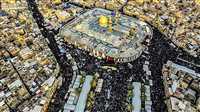
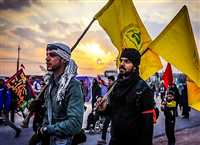
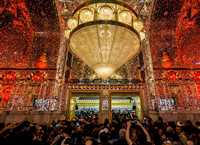
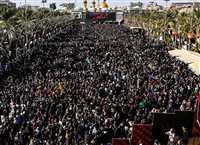
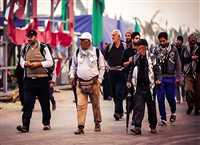
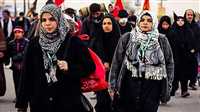
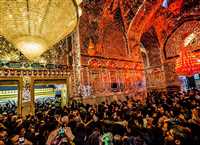
As the world’s most populous gathering, millions of people annually take part in Arbaeen march ritual in Karbala to hold Arbaeen mourning ceremonies, the 40th day after the martyrdom of Imam Hussein (AS) and his companions on Ashura.
Arbaeen mourning ceremony, as a religious observation, has been inscribed on the UNESCO list of the Intangible Cultural Heritage of Humanity.
A peculiar feature of Arbaeen is that despite of being a distinctively Shia spiritual exercise, a number of Sunnis, even Christians, Zoroastrians, and others are also seen in both the pilgrimage as well as serving of devotees.
Given the exclusive nature of religious rituals, this is remarkable and it could only mean one thing: people regardless of color or creed see Hussein as a universal, borderless, and meta-religious symbol of freedom and compassion.
Imam Hussein (AS), along with his 72 faithful followers and family members, was martyred by Yazid Bin Moaweya, the tyrant of his time.
Imam's martyrdom occurred in the battle of Karbala, a city in Iraq located about 100 km southwest of Baghdad.