Live
فارسی عربي
109
-
Aa
+

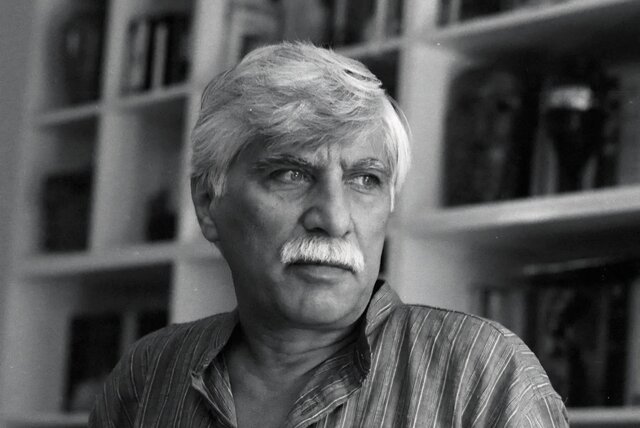
In tribute to Iran's master auteur

The late Bahram Beizaee, Iran’s master auteur, regarded Ferdowsi’s Shahnameh as an unparalleled heritage for the Persian language and culture.

The late Bahram Beizaee, Iran’s master auteur, viewed Ferdowsi’s Shahnameh as an inexhaustible treasury for the Persian language and imagination.

For him, the epic was not simply a historical narrative, but a civilizational act, one that safeguarded Iran’s myths, symbols, and moral memory across centuries.

In Beizaee’s understanding, Ferdowsi re‑awakened ancient stories and heroic archetypes, ensuring their continuity through language and poetic form.

This reverence for myth and memory deeply shaped Beizaee’s own creative path in theater and cinema.

A prolific playwright, filmmaker, and scholar, author of nearly 70 books and 14 plays, Beizaee approached cinema as a modern extension of classical storytelling.

His works are marked by symbolic density, and a profound engagement with ethical choice.

Among his most celebrated achievements are 'Bashu, the Little Stranger' and 'The Faithful Day', both regarded as milestones of Iranian cinema.

'Bashu, the Little Stranger' (1989)

This timeless human drama follows Bashu, a young boy displaced from his homeland who finds refuge in a northern Iranian village. Unable at first to share a common language, Bashu forms a bond with a devoted mother whose compassion bridges cultural and linguistic divides.

Through natural imagery, silence, and ritual, Beizaee crafted a universal story about belonging, care, and human resilience. The film was especially admired for its dignified portrayal of motherhood and its gentle vision of empathy as a unifying force.

'The Fateful Day' (1995)

Written by Beizaee and directed by Shahram Assadi, this religious epic offers a contemplative portrayal of Ashura and the martyrdom of Imam Hussein (AS). The narrative unfolds as a spiritual journey, emphasizing moral awakening, devotion, and the timeless values of faith and sacrifice.

Presented in a restrained, poetic style, the work has earned lasting admiration for its depth, symbolism, and respectful approach to sacred history.

Across his career, Beizaee transformed classical Persian thought into modern artistic form. Much like Ferdowsi, he revealed how language, image, and story can preserve meaning across generations. 

Comments
Send