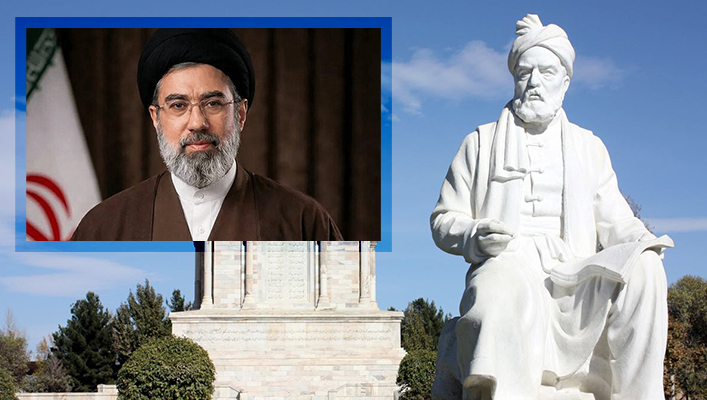
The Leader’s message reads as follows:
“Beyond being a tool for speech and writing, the Persian language constitutes the medium of understanding and the bond that connects the thoughts and identity boundaries of Iranians. Persian language and literature represent one of the greatest capacities for promoting the rich culture and civilization of Islamic Iran throughout the world. The recommendation of our wise and martyred Leader to empower the Persian language remains a guiding light for strengthening the authority of the Iranian-Islamic civilization.”
“The dear people of Iran, during the third Sacred Defense, as in the two previous imposed wars, have once again proven that Ferdowsi’s mythological stories are reflections of their real lives and heroic spirit. The humanistic, valiant, and Qur’anic concepts of the Shahnameh unite all ethnic and social groups of Iran in preserving their identity, authenticity, and independence, and in resisting aggressors.”
“This epic of presence, defense, and victory imposes a great duty upon the community of culture, literature, and art — to rise, as Ferdowsi did, to bring forth the renaissance of artists in continuation of the renaissance of the people; to merge intellect, pen, and language with art; and to make the narrative of the nation’s great uprising an enduring part of history.”
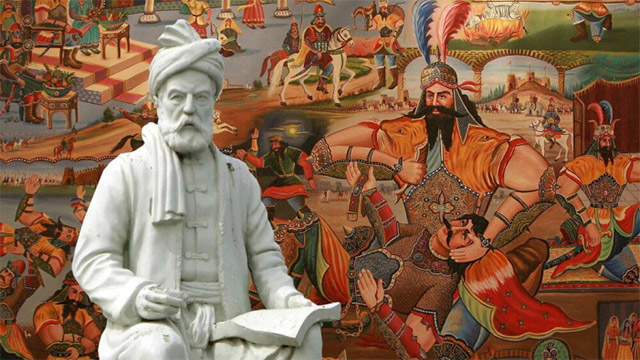
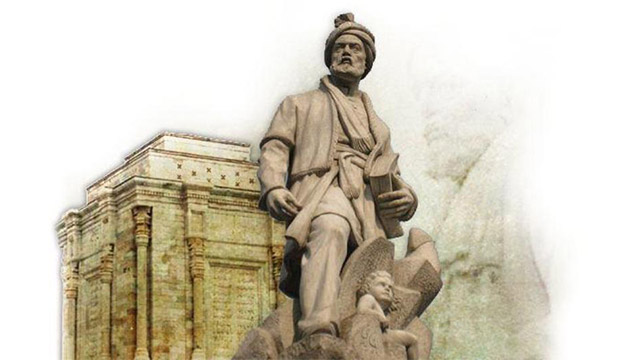
Abolqasem Mansour bin Hassan Tusi (940 – 1025), better known by his pen name Ferdowsi, was a Persian poet and the author of ‘Shahnameh’ (Book of Kings), which is one of the world's longest epic poems created by a single poet, and the greatest epic of the Persian-speaking countries. Ferdowsi is celebrated as one of the most influential figures of Persian literature and one of the greatest in the history of literature.
In the Shahnameh, Ferdowsi links the culture of pre-Islamic Iran with the culture of post-Islamic Iran. What Ferdowsi was dealing with was not only poetic but also intellectual; he did not write fiction. Ferdowsi considers wisdom as the source and capital of all goodness. He believes that a person with wisdom recognizes good and evil from each other, and in this way, he reaches the happiness of this world and the salvation of the other world.
The Shahnameh tells of the mainly mythical but to some extent historical past of Iran from the creation of the world until the Muslim conquest in the seventh century. Iran, Afghanistan, Azerbaijan, Tajikistan, and the greater region influenced by Persian culture, such as Armenia, Dagestan, Georgia, Turkey, Turkmenistan, and Uzbekistan, celebrate this national epic.